
When people talk about reducing the cost of green hydrogen, the conversation almost always comes back to one critical choice:
Which electrolyzer technology is better—Alkaline or PEM?
Both are widely used for hydrogen production through Electrolysis of Water, but they differ significantly in design, performance, cost, and real-world suitability. The answer isn’t as simple as choosing one over the other—it depends on where and how you plan to produce hydrogen.
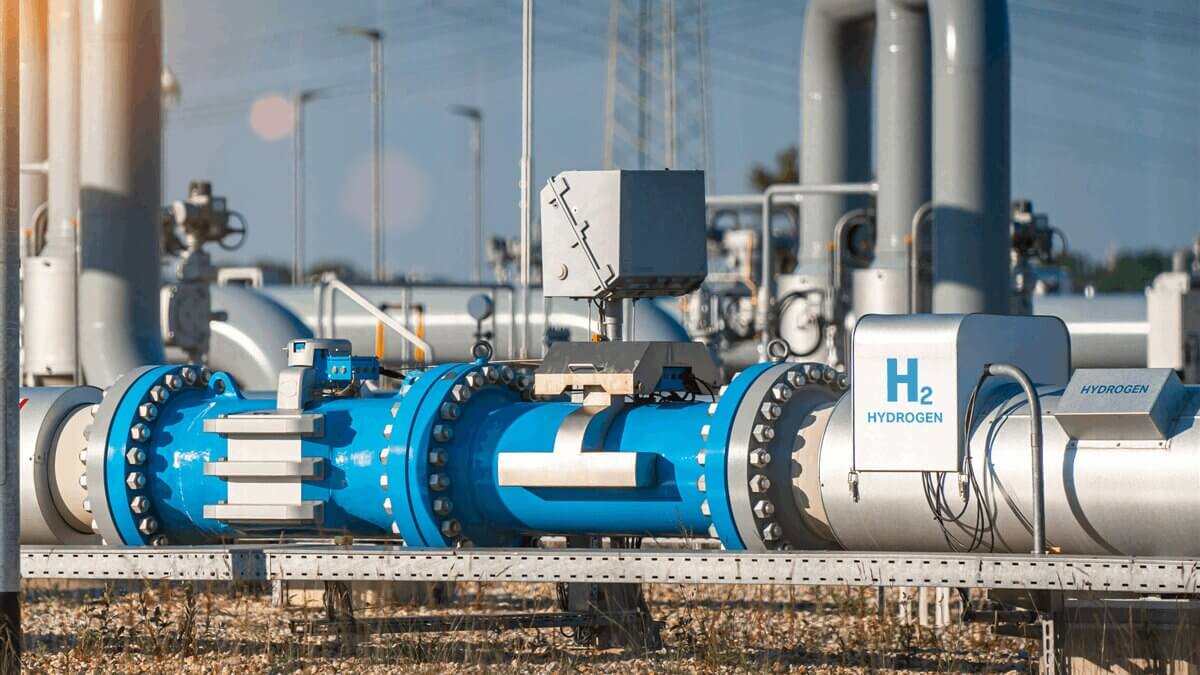
Let’s break this down in a clear, practical way.
Understanding the fundamental difference.
At a high level, both technologies do the same job: they split water into hydrogen and oxygen using electricity. The difference lies in how they conduct ions inside the system.
Alkaline Electrolyzers (AEL):
Alkaline electrolyzers use a liquid electrolyte, typically potassium hydroxide (KOH). This solution allows ions to move between electrodes and enables the reaction.
This technology has been around for decades and is considered mature and well-tested. Many industrial hydrogen plants today still rely on alkaline systems because of their reliability and relatively low cost.
PEM Electrolyzers (Proton Exchange Membrane):
PEM electrolyzers use a solid polymer membrane instead of a liquid electrolyte. This membrane conducts protons while keeping gases separated.
The result is a more compact, responsive, and efficient system—but also one that depends on expensive materials like platinum and iridium.
Efficiency – which produces more hydrogen?
Efficiency directly affects cost, because electricity is the biggest expense in hydrogen production.
Alkaline systems typically operate at around 60–70% efficiency, while PEM electrolyzers can reach 65–80% efficiency under optimal conditions.
This means PEM systems generally require less electricity per kilogram of hydrogen, especially when operating dynamically with renewable energy.
However, the difference is not always dramatic in real-world conditions. In stable, continuous operations, alkaline systems can perform quite competitively.
Cost – the biggest deciding factor.
If you look purely at upfront investment, alkaline electrolyzers clearly have the advantage. They are:
- Cheaper to manufacture.
- Built with widely available materials.
- Easier to scale using existing designs.
PEM systems, on the other hand, are more expensive due to:
- Precious metal catalysts.
- Advanced membrane materials.
- More complex manufacturing.
This makes alkaline technology the preferred choice for large, cost-sensitive industrial projects today.
But there’s a catch—cost is not just about equipment.
Flexibility with renewable energy.
This is where PEM electrolyzers shine.
Renewable energy sources like solar and wind are intermittent. Their output fluctuates throughout the day. A good electrolyzer must be able to:
- Start and stop quickly.
- Operate efficiently at partial loads.
- Respond to changing power input.
PEM systems excel in this environment. They can ramp up and down rapidly without losing efficiency, making them ideal for integration with renewable energy.
Alkaline electrolyzers, by contrast, prefer steady, continuous operation. Frequent fluctuations can reduce efficiency and increase wear over time. This makes PEM a better fit for future energy systems, even if it’s currently more expensive.
Hydrogen purity and pressure.
Another important difference lies in output quality.
PEM electrolyzers can produce:
- Higher purity hydrogen.
- At higher pressures (up to 30–70 bar) directly from the system.
This reduces the need for additional compression equipment, saving cost and energy downstream.
Alkaline systems usually operate at lower pressures and may require extra purification steps, depending on the application.
Durability and lifespan.
Alkaline electrolyzers have a long track record and are known for their durability. Many systems can operate reliably for 60,000–90,000 hours with proper maintenance.
PEM systems are improving quickly but still face challenges related to:
- Membrane degradation.
- Catalyst lifespan.
- Sensitivity to impurities.
However, ongoing research is steadily closing this gap.
Safety and operational complexity.
Because alkaline systems use a liquid electrolyte (KOH), they require careful handling and maintenance. The presence of corrosive liquids adds operational complexity that shorten the life of internal components.
PEM systems avoid liquid electrolytes, making them:
- More compact.
- Easier to operate.
- Potentially safer in certain setups.
This makes PEM attractive for modular and decentralized hydrogen production.
Real-world use cases – where each technology wins!
Practically, neither technology is universally “better”, each has its ideal use case.
Alkaline electrolyzers are best suited for:
- Large-scale industrial hydrogen production.
- Projects with stable electricity supply.
- Cost-sensitive deployments.
PEM electrolyzers are better for:
- Renewable energy integration.
- Distributed or modular systems.
- High-purity hydrogen applications.
The future – will one replace the other?
The industry is not moving toward a single winner. Instead, both technologies are evolving in parallel.
Alkaline systems are becoming more flexible and efficient, while PEM systems are getting cheaper as manufacturing scales up and catalyst usage is reduced.
There is also a third emerging category—Solid Oxide Electrolyzers (SOEC)—which could offer even higher efficiency in the future, especially when combined with industrial heat sources.
Final verdict.
So, which is better: Alkaline or PEM?
The honest answer is: Alkaline is better for cost and proven reliability. PEM is better for efficiency, flexibility, and future-ready energy systems.
If your goal is to produce hydrogen as cheaply as possible today, alkaline may be the right choice. But if you’re building a system designed to integrate with renewable energy and adapt to future demands, PEM is likely the smarter investment.
Bottom line.
The competition between alkaline and PEM electrolyzers is not about replacing one with the other—it’s about choosing the right tool for the job.
As green hydrogen scales globally, both technologies will play a crucial role in shaping a cleaner, more flexible energy future.

Leave a Reply