
Green hydrogen is often called the fuel of the future, but one major question still dominates the conversation:
How much does it actually cost to produce 1 kg of green hydrogen?
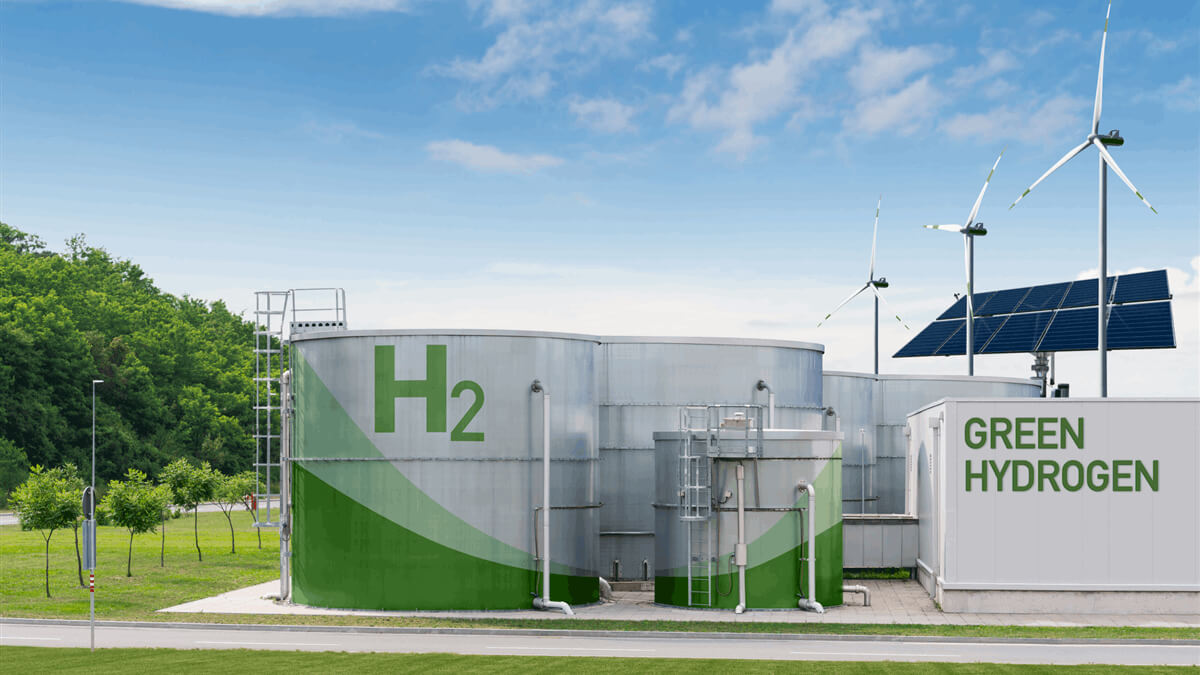
The answer isn’t simple. Costs vary widely depending on technology, electricity prices, efficiency, and scale. In this guide, we’ll break down everything—from raw numbers to hidden factors, challenges, and real-world solutions.
What does 1 kg of green hydrogen mean?
Before diving into cost, it’s important to understand the baseline.
- 1 kg of hydrogen contains ~33.3 kWh of energy.
- Producing it via electrolysis typically requires:
- 50–55 kWh of electricity.
- 9–10 liters of water.
This gap between energy input and output highlights efficiency losses—which directly impact cost.
Average cost of producing 1 kg of green hydrogen.
As of today (2025–2026 estimates):
$3 to $8 per kg (₹250 to ₹650 per kg)
Cost breakdown (typical scenario).
| Component | Cost Contribution |
|---|---|
| Electricity | 60–70% |
| Electrolyzer CAPEX | 15–25% |
| Operations & Maintenance | 5–10% |
| Water & Miscellaneous | <5% |
The biggest cost driver: Electricity.
Electricity is the single most important factor.
Example calculation:
- Electricity required: 50 kWh.
- Cost per kWh: ₹4 ($0.05).
Total electricity cost = ₹200 ($2.5).
Now imagine:
- Solar/wind power at ₹2/kWh → Cost drops significantly.
- Grid power at ₹8/kWh → Cost doubles.
Conclusion: Cheap renewable energy = cheap hydrogen.
Electrolyzer efficiency & its impact.
Electrolyzers convert electricity into hydrogen—but not perfectly.
Types of electrolyzers:
1. Alkaline electrolyzers.
- Mature technology.
- Lower cost.
- Efficiency: ~60–70%.
2. PEM (Proton Exchange Membrane).
- Higher efficiency.
- Faster response (good for renewables).
- More expensive.
3. SOEC (Solid Oxide Electrolyzers).
- Very high efficiency (up to ~80–90%).
- Still emerging.
Higher efficiency = less electricity needed = lower cost per kg.
Capital costs (CAPEX).
Electrolyzers are expensive upfront.
- Current cost: $500 to $1,500 per kW.
- Expected to drop to $200–$500 per kW by 2030.
CAPEX affects:
- Project viability.
- Payback period.
- Hydrogen price over time.
Water costs (often ignored).
Water seems cheap—but purity matters.
- Electrolysis requires deionized water.
- Treatment adds cost.
Still, water contributes <1% of total cost, so it’s not a major concern.
Why is green hydrogen still expensive?
Compared to grey hydrogen (~$1–$2/kg), green hydrogen is still costly.
Key challenges:
1. High renewable energy costs.
- Solar/wind not always available.
- Storage adds cost.
2. Low utilization rates.
- Electrolyzers don’t run 24/7.
- Intermittent energy reduces efficiency.
3. Expensive infrastructure.
- Storage, transport, compression.
- Hydrogen pipelines are limited.
4. Technology maturity.
- Some electrolyzers are still evolving.
- Scaling issues remain.
Real-world cost variations.
Costs differ based on geography:
| Region | Estimated Cost |
|---|---|
| India | $3–$6/kg. |
| Europe | $4–$8/kg. |
| Middle East | $2.5–$4/kg. |
| Australia | $3–$5/kg. |
Countries with cheap solar + land + policy support win. If decent level of tax relaxation given cost may come down to 60-72% of current cost.
Solutions to reduce cost.
Here’s how the industry is tackling the problem:
1. Cheaper renewable energy.
- Large solar/wind farms.
- Hybrid energy systems (solar + wind + storage).
2. Scaling up production.
- Gigawatt-scale hydrogen plants.
- Economies of scale reduce CAPEX.
3. Better electrolyzers.
- Higher efficiency.
- Lower material costs (less platinum, iridium).
4. Government incentives.
- Subsidies.
- Tax credits.
- Carbon pricing.
India’s National Green Hydrogen Mission is a big step in this direction.
Future cost projections.
Experts predict:
- By 2030 → $1.5–$3/kg.
- By 2040 → Near parity with grey hydrogen.
This is known as “cost parity”—the tipping point for mass adoption.
When will green hydrogen become profitable?
Profitability depends on:
- Carbon taxes (penalizing fossil fuels).
- Industrial demand (steel, ammonia, shipping).
- Export markets (Europe, Japan).
In sectors where electrification is hard, green hydrogen becomes highly valuable—even at higher costs. Its very much like solar technology initially.
Hidden costs you should know.
Most discussions ignore these:
- Compression or liquefaction costs.
- Storage losses.
- Transport logistics.
- Safety infrastructure.
These can add $1–$3/kg extra in real-world scenarios.
Final verdict.
Producing 1 kg of green hydrogen today is not cheap—but it’s getting there fast.
Key takeaways:
- Current cost: $3–$8 per kg.
- Electricity is the biggest factor.
- Efficiency and scale are improving rapidly.
- Costs could drop by 50%+ in the next decade.
Bottom line.
Green hydrogen is not just about cost—it’s about long-term sustainability, energy independence, and decarbonization.
As technology improves and renewable energy becomes cheaper, green hydrogen is set to move from “expensive alternative” to “mainstream energy solution”.

Leave a Reply