
For decades, the technology industry followed a predictable pattern.
Every year brought faster processors, more powerful graphics cards, larger storage devices, and meaningful improvements for everyday consumers.
Whether you were building a gaming PC, upgrading a laptop, or purchasing a new workstation, there was always something exciting around the corner.
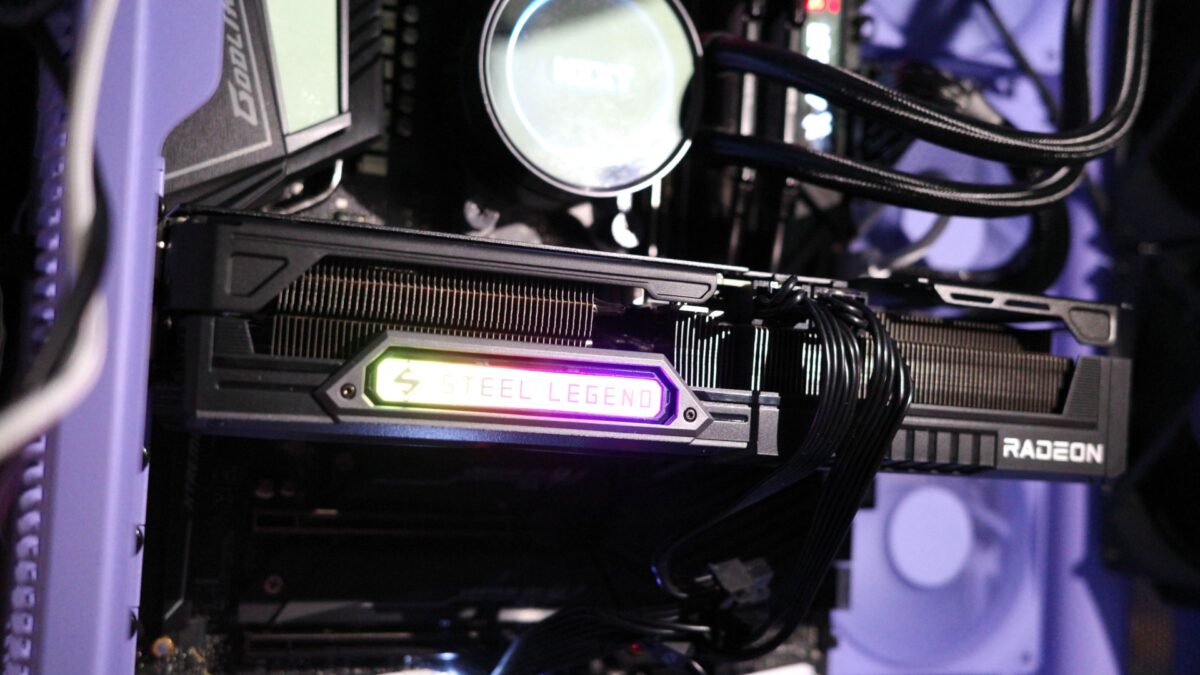
Today, that cycle is beginning to change. The rapid rise of Artificial Intelligence has fundamentally altered the priorities of the semiconductor industry. Instead of competing to build the best products for consumers, many of the world’s largest chip manufacturers are increasingly focused on serving AI data centers, where profit margins are significantly higher and demand appears almost limitless.
This shift could have long-term consequences for hardware enthusiasts, gamers, content creators, and ordinary computer users.
The new gold rush—AI data centers.
Companies developing AI models require enormous computing power. Training modern AI systems can consume thousands of GPUs operating continuously for weeks or even months. As a result, chip companies such as NVIDIA, Samsung Electronics, and Micron Technology are investing heavily in products designed specifically for data centers rather than consumers.
The reason is simple—money, hell lot of money.

A consumer graphics card might generate a few hundred dollars in profit. An AI accelerator sold to a hyperscale data center can generate thousands or even tens of thousands of dollars in revenue. When demand is virtually unlimited, manufacturers naturally focus their resources on the most profitable market.
Why consumer hardware is no longer the main attraction?
The PC market once drove innovation across the semiconductor industry. Faster CPUs, new memory standards, improved storage technologies, and cutting-edge graphics architectures were primarily designed with consumers in mind.
Today, many technological breakthroughs are first developed for AI infrastructure.
High-bandwidth memory, advanced packaging technologies, massive GPU clusters, specialized AI accelerators, and next-generation networking solutions are all being prioritized because they serve the exploding data center market.
Consumers often receive these innovations years later—if they receive them at all.
The end of annual innovation?
Not long ago, major hardware improvements arrived almost every year.
A new CPU generation could deliver double-digit performance gains. Graphics cards often offered dramatic improvements over previous models. Storage technology evolved rapidly from HDDs to SSDs and then to NVMe drives.
That pace has slowed considerably.
Recent hardware generations frequently offer incremental improvements rather than revolutionary advances. Performance gains are often measured in single-digit percentages rather than transformative leaps.
While engineering challenges and manufacturing costs play a role, the AI boom has accelerated this trend by redirecting research and development resources toward data center products.
What was once a one-year innovation cycle is gradually becoming a two-to-three-year cycle for many consumer technologies.
If current trends continue, major consumer hardware advancements may become even less frequent in the future.
The growing risk to hardware ownership.
Another emerging concern is accessibility.
As AI companies purchase massive quantities of GPUs, memory chips, storage devices, and networking equipment, supply chains become increasingly optimized around enterprise demand.
Consumers may eventually face:
- Higher hardware prices; despite high consumer demands.
- Reduced product availability; due to high margin from data centers.
- Longer upgrade cycles; as data centers don’t need innovation all time.
- Fewer consumer-focused innovations, and more of data center-focused.
- Increased emphasis on cloud services.
In such a world, owning powerful local hardware could become more expensive and less practical.
The industry may gradually encourage users to rent computing power through subscriptions rather than own capable machines outright.
Are we entering the cloud-first era?
Many technology companies are already pushing cloud-based solutions.
Gaming is moving toward cloud platforms.
AI assistants are running on remote servers.
Professional software increasingly relies on subscriptions and online services.
The more computing shifts into data centers, the less incentive manufacturers have to build extremely powerful consumer hardware.
This raises an important question:
Will future generations own their computing power, or merely rent access to it?
Why enthusiasts should pay attention?
Hardware enthusiasts have historically benefited from fierce competition and rapid innovation. Every generation brought better performance, lower costs, and exciting new technologies.
The AI revolution may change that balance.
Data centers are becoming the semiconductor industry’s largest customers. As a result, consumer products risk becoming secondary priorities.
This does not mean innovation will stop completely. Technology will continue to advance. However, the direction of that advancement may increasingly favor AI infrastructure over personal computing.
The biggest concern is not that progress ends.
The concern is that progress continues—but no longer for ordinary users.
Conclusion.
Artificial Intelligence is driving one of the largest technology booms in history. Yet every technological revolution creates winners and losers.
Today, data centers are the clear winners.
The question is whether consumers, gamers, and PC enthusiasts will eventually become the losers.
If chip manufacturers continue prioritizing enterprise AI customers above all else, the future may bring fewer upgrades, longer innovation cycles, higher prices, and a gradual shift away from personal hardware ownership.
The AI era promises incredible possibilities, but it may also mark the beginning of a world where the most advanced computing power is no longer sitting on your desk—it is sitting in someone else’s data center.

Leave a Reply