
For a technology introduced in the early 1990s, 2G has proven surprisingly difficult to kill. While countries worldwide aggressively expand 4G and 5G networks — and some are already preparing for early 6G research and deployment — millions of people and devices still depend on 2G every single day.
India continues to maintain massive 2G usage in rural and low-income regions, many African countries still rely heavily on GSM infrastructure, and even parts of Europe keep 2G active as a fallback layer for IoT and emergency systems.
Meanwhile, 3G is disappearing so quickly that in many regions it is being erased before 2G itself, and rapidly moving to 4G and 5G with ultimate fallback to 2G.
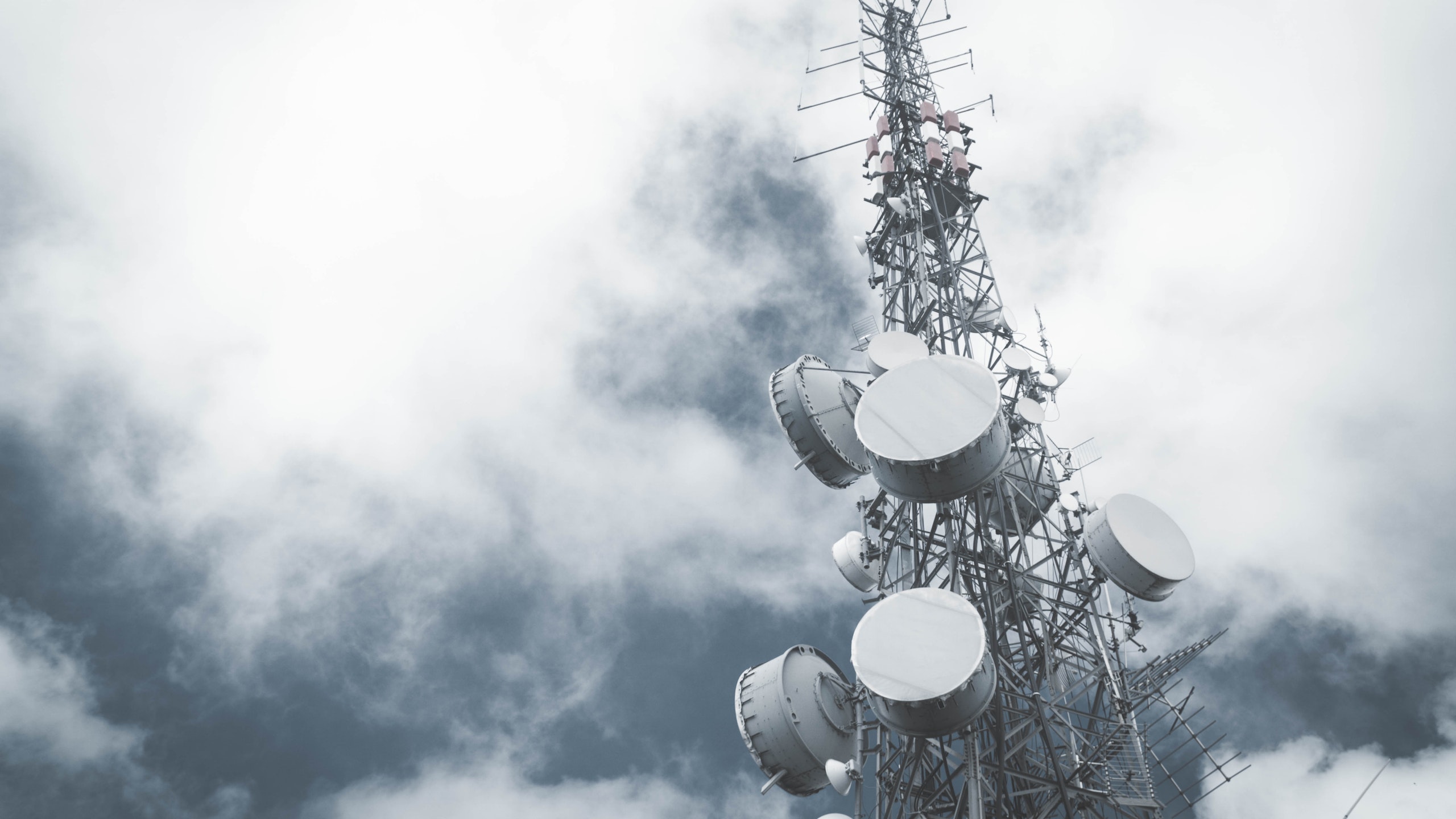
The contrast is remarkable. Countries such as the United States, South Korea, Japan, Australia, and the UAE have either already shut down 2G or are very close to doing so. At the same time, India, South Africa, Brazil, many Southeast Asian nations, and large portions of Africa are still carefully delaying full 2G shutdowns because the economic and social consequences are simply too large.
Telecom operators want spectrum for faster 5G expansion, but governments cannot ignore the millions of users who still carry basic feature phones.
Interestingly, 3G became the biggest casualty in this transition.
In many countries, telecom providers shut down 3G first while keeping 2G alive.
The reason is simple — the 2nd generation of radio signal is still extremely efficient for voice calls, low-power communication, machine-to-machine systems, smart meters, vehicle trackers, and inexpensive feature phones.
3G ended up trapped in the middle — too outdated to compete with 4G data speeds, yet too expensive and power-hungry compared to 2G for lightweight applications.
If you want to understand the technical foundations behind why GSM networks remain active even today, you can also read our detailed guide on why is 2G still in use?, where we explored the technical and historical reasons behind 2G’s unusual longevity.
This article focuses more on the global struggle to actually shut it down.
Why telecom operators want to end 2G?
From a telecom company’s perspective, keeping the 2G alive makes little business sense anymore. Running multiple generations of mobile networks simultaneously is expensive. Operators must maintain towers, radio equipment, power systems, and legacy infrastructure for technologies that generate relatively low revenue.
Every MHz of spectrum occupied by 2G could instead be used for the faster and more profitable 4G and 5G services, but they are unable to do this.
Modern mobile networks are also far more spectrum-efficient. A single 5G network can handle dramatically higher traffic volumes compared to 2G GSM infrastructure.
As video streaming, cloud gaming, AI services, and connected devices continue to grow, telecom companies desperately need additional bandwidth.
Energy consumption is another major factor. Legacy layers increase operational costs significantly. Maintaining older 2G and 3G systems alongside 4G and 5G increases infrastructure complexity, maintenance costs, and electricity usage.
In theory, shutting down 2G should have happened years ago.
In reality, things became far more complicated.
Problem — millions still depend on 2G.
The biggest obstacle is not technology. It is affordability.
In countries like India, millions of people still use low-cost feature phones because smartphones remain expensive relative to income levels.
Even though ultra-cheap Android devices exist, replacing hundreds of millions of functioning 2G phones is not economically easy for lower-income households.
For many users, mobile phones are not entertainment devices. They are tools for basic communication, OTP verification, emergency calls, and banking alerts. A simple keypad phone with week-long battery life still works perfectly for their needs.
This creates a difficult political problem.
Governments pushing aggressive 2G shutdowns risk digitally isolating vulnerable populations. That is why countries such as India and South Africa have approached the transition much more cautiously compared to wealthier nations.
Some countries have managed relatively successful shutdowns by distributing subsidized or affordable 4G feature phones to poorer users. However, replicating such programs at massive population scale remains extremely difficult.
IoT quietly became 2G’s lifeline.
Most people think 2G survives only because of old mobile phones.
That is no longer true.
The real reason 2G remains difficult to eliminate is the enormous number of IoT and machine-to-machine devices built around GSM networks.
These include:
- Smart electricity meters.
- Vehicle tracking systems.
- Industrial sensors.
- ATM machines.
- Elevator emergency systems.
- Security alarms.
- Agricultural monitoring devices.
- Remote telemetry systems.
Many of these devices were designed for 10–20 year operational lifecycles. Replacing them is extremely expensive and often logistically difficult.
For lightweight IoT applications, 2G is often still “good enough.” These devices send tiny amounts of data and do not require 4G or 5G speeds. GSM modules are cheap, widely available, power-efficient, and reliable in rural environments.
This explains why some countries are shutting down 3G first while deliberately extending 2G support for years longer.
Why 3G died faster than 2G?
The collapse of 3G is one of the strangest chapters in telecom history.
For years, 3G was marketed as the future of mobile internet. Yet it disappeared faster than the older 2G technology it was supposed to replace.
The reason comes down to positioning.
2G remained useful for extremely low-bandwidth communication and voice fallback services. Meanwhile, 4G LTE became dramatically superior for internet access, streaming, video calls, and modern mobile apps.
3G ended up serving neither purpose efficiently.
It consumed more spectrum and power than 2G while offering a far worse experience than 4G. Telecom operators saw little reason to continue supporting it. As a result, many countries accelerated 3G shutdowns years before planning complete 2G retirement.
Rural coverage still favors 2G.
Another overlooked factor is coverage.
2G signals travel long distances and perform relatively well in rural or remote regions. Maintaining basic GSM coverage across sparsely populated areas is often cheaper than building dense 4G or 5G infrastructure.
This is particularly important in developing countries where telecom companies must balance modernization with affordability.
Even in advanced markets, 2G occasionally survives as an emergency fallback layer. Some LTE-enabled devices still revert to GSM when stronger signals are unavailable.
That reliability matters more than speed in many situations.
The global shutdown is happening — but slowly.
Despite the delays, 2G will eventually disappear.
Countries including Australia, Japan, South Korea, Taiwan, Switzerland, and the United States have already moved ahead with shutdowns or completed them entirely. Others are following gradually. However, there is no single global timeline.
Some European operators plan to keep GSM active until the late 2020s. Certain African and Latin American regions may continue using 2G even longer due to infrastructure costs and economic realities. This fragmented transition creates major complications for global IoT companies, telecom vendors, and device manufacturers trying to maintain compatibility across multiple regions.
The future after 2G.
The long-term replacement for 2G in low-power communication is expected to come from technologies such as LTE-M and NB-IoT. These standards are designed specifically for connected devices, offering better efficiency, stronger security, and longer battery life while operating on modern 4G infrastructure.
But replacing billions of legacy devices worldwide will take years.
Possibly decades in some regions.
That is why the global mobile industry now faces an unusual reality: while the world races toward AI-powered 5G and future 6G systems, one of the oldest mobile technologies ever created still refuses to disappear.
And until affordable connectivity reaches everyone equally, shutting down 2G will remain far more difficult than telecom operators originally expected.

Leave a Reply