
Imagine walking into your office one morning to find every single computer displaying the same message: your files have been encrypted, and you have 72 hours to pay a specific amount in cryptocurrency, or they’re gone forever.
No warning, no negotiation window before the fact — just a locked-out organization staring at a countdown timer created by someone they’ve likely never even seen.
This isn’t a hypothetical scenario.
It’s happened to hospitals, city governments, schools, pipelines, and thousands of businesses of every size, and it happens with disturbing regularity.
Ransomware has evolved from a relatively niche cyber crime into a genuinely massive, organized global industry — and understanding how it actually works is essential to understanding one of the biggest cybersecurity threats of the current era.
What is ransomware, exactly?
Ransomware is a type of malicious software specifically designed to block access to a victim’s data or systems — most commonly by encrypting files so they become completely unusable — until a ransom is paid to the attacker, typically in cryptocurrency, in exchange for a decryption key that theoretically restores access.
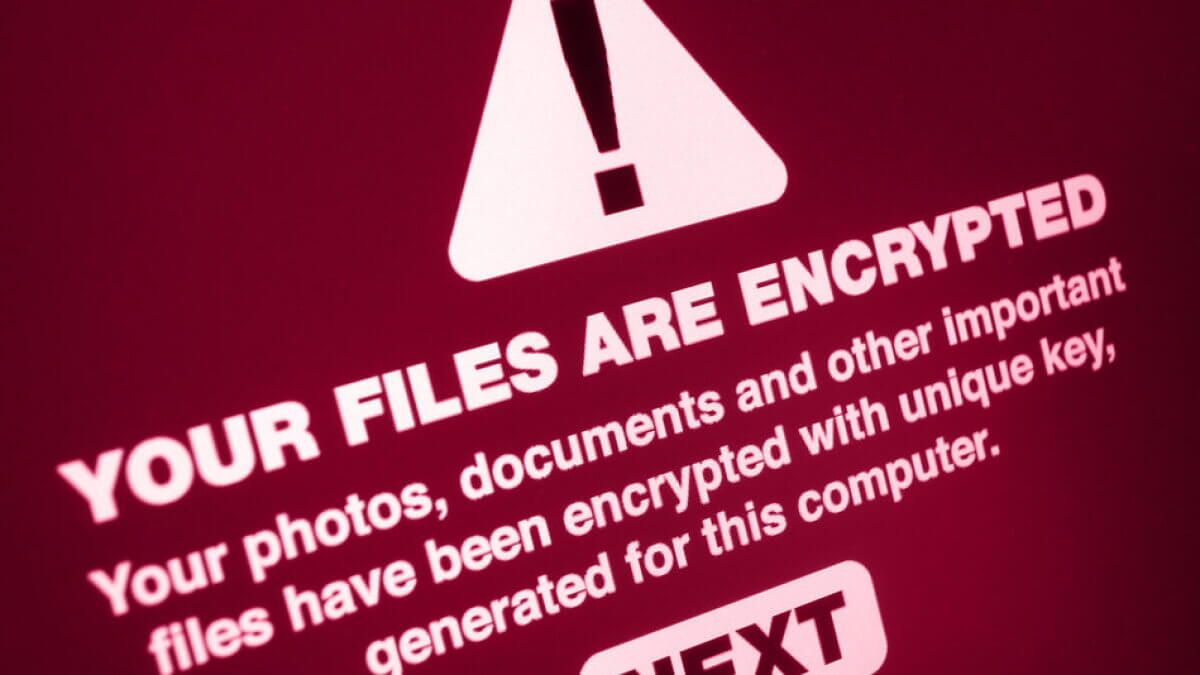
The core mechanism is deceptively simple: once ransomware infects a system, it systematically encrypts files using strong encryption the victim has no way to reverse without the attacker’s private key. A ransom note typically appears, explaining what happened, how much is demanded, how to pay, and often a countdown timer creating urgency — sometimes threatening that the ransom amount will increase, or that data will be permanently deleted, if payment isn’t made within the specified window.
How ransomware actually gets in?
Ransomware doesn’t magically appear on a system — it requires an initial point of entry, and understanding these entry points is central to understanding how to prevent an infection in the first place.
Phishing emails remain the single most common delivery method, tricking a user into clicking a malicious link or opening an infected attachment disguised as something legitimate — an invoice, a shipping notification, a document requiring “urgent review.”
Exploiting unpatched vulnerabilities in software, operating systems, or exposed network services gives attackers a direct technical path in, without needing to trick any individual user at all. This is precisely why security updates matter so much — many major ransomware attacks specifically exploited vulnerabilities that had already been patched months earlier, but simply hadn’t been applied yet on the affected systems.
Remote Desktop Protocol (RDP) exploitation has become an especially common entry point for ransomware targeting businesses, where attackers find and exploit poorly secured remote access systems — often protected by weak or reused passwords — to gain direct access to internal networks.
Malicious downloads and compromised websites can silently deliver ransomware through drive-by downloads or by disguising the malware as legitimate-looking software.
Supply chain and third-party compromise, similar to broader data breach patterns, where attackers compromise a trusted software vendor or service provider, then use that trusted relationship to distribute ransomware to the vendor’s actual customers.
From simple extortion to a full criminal industry.
Ransomware has evolved significantly from its earlier, relatively unsophisticated origins into a highly organized criminal ecosystem, and a few key developments explain that shift.
Ransomware-as-a-Service (RaaS)
Much like legitimate software companies license their products, sophisticated ransomware groups now develop and lease out their ransomware tools to other criminals — often called “affiliates” — in exchange for a cut of any successful ransom payments. This dramatically lowers the technical skill barrier required to launch a ransomware attack, since an affiliate doesn’t need to build the malware themselves, only distribute it and manage the extortion process, using tools and infrastructure provided by the core ransomware group.
Double extortion.
Earlier ransomware attacks primarily relied on encryption alone — pay up, or lose access to your files permanently. Modern ransomware groups have added a second, often more damaging layer: before encrypting files, attackers frequently exfiltrate (steal a copy of) sensitive data first. This means even if a victim has solid backups and can restore their systems without paying, attackers can still threaten to publicly leak or sell the stolen data unless a ransom is paid — turning ransomware into both an availability threat and a data breach simultaneously.
Targeting critical infrastructure.
While ransomware affects organizations of every size, some of the most consequential and widely publicized attacks in recent years have specifically targeted critical infrastructure — hospitals, pipelines, water treatment facilities, and government services — where the operational disruption caused by an attack creates significantly higher pressure to pay quickly, given the potential real-world consequences of prolonged downtime.
Should you ever pay the ransom?
This is a genuinely difficult, actively debated question, even among cybersecurity professionals, and there’s no universally agreed-upon single answer.
Arguments against paying center on the fact that paying directly funds and incentivizes further criminal activity, and there’s no actual guarantee that paying results in a working decryption key or that stolen data won’t still be leaked regardless. Some victims who’ve paid have received broken or incomplete decryption tools, or found themselves targeted again later, having demonstrated a willingness to pay.
Arguments for paying, in specific extreme circumstances, generally center on situations where the alternative — permanent loss of critical data with no viable backup, or life-threatening operational disruption in contexts like healthcare — creates consequences considered by decision-makers to be worse than the ethical and financial cost of paying.
Law enforcement agencies in most countries generally discourage or in some cases legally restrict ransom payments, precisely because of the broader incentive problem it creates for the ecosystem as a whole. The strongest, most universally recommended position among security professionals is prevention and preparation specifically designed to make the “should we pay” question unnecessary in the first place — primarily through reliable, tested backup systems.
Why backups are the single best defense?
If there’s one specific defense that consistently comes up as the most effective countermeasure against ransomware’s core threat, it’s maintaining solid, regularly tested backups.
The logic is straightforward: if your files are encrypted by ransomware but you have a recent, unaffected backup stored separately, the encryption itself stops being catastrophic — you can restore your systems from the backup and largely sidestep the core extortion threat entirely (setting aside the double-extortion data-leak concern covered above, which backups alone don’t fully solve).
Effective ransomware-resistant backup strategies generally follow what’s often called the “3-2-1 rule”: keep at least 3 copies of your data, on 2 different types of storage media, with at least 1 copy stored completely offline or otherwise isolated from your main network. This last point matters enormously — sophisticated ransomware specifically searches connected networks for backup systems and attempts to encrypt or delete those too, so a backup that’s constantly connected to the same network as your primary systems offers significantly less protection than a properly isolated, offline, or immutable backup.
How to actually reduce ransomware risk?
Keep software and systems updated. Since many ransomware attacks specifically exploit known, already-patched vulnerabilities, consistent, timely security updates close off a significant number of potential entry points.
Train for phishing awareness. Since phishing remains a top delivery method, genuine awareness and healthy skepticism toward unexpected emails, links, and attachments meaningfully reduces risk at the most common point of entry.
Use strong, unique passwords and MFA, particularly for remote access systems and administrative accounts, since weak or reused credentials remain a common exploited entry point.
Segment networks properly. Limiting how easily malware can spread laterally across an entire network — similar to the Zero Trust security principles discussed elsewhere — significantly limits the damage a single successful infection can cause.
Maintain tested, isolated backups, following the 3-2-1 principle, and actually test the restoration process periodically rather than simply assuming backups will work correctly when actually needed.
Have an incident response plan in place before an attack happens. Organizations that have already mapped out exactly who to contact, what steps to take, and how to isolate affected systems tend to respond significantly faster and more effectively than those improvising during an active, high-pressure attack.
Common ransomware myths.
“Ransomware only targets large companies with valuable data.” Ransomware groups increasingly target organizations of every size, including small businesses, schools, and individuals, precisely because smaller targets often have weaker defenses despite potentially still being willing or desperate enough to pay.
“Paying the ransom guarantees I’ll get my files back.” There’s no actual guarantee. Some victims receive broken decryption tools, incomplete data recovery, or no response at all after payment, and some attackers double back for a second ransom demand regardless.
“Antivirus software alone will fully protect me from ransomware.” Security software provides meaningful protection and can catch many known threats, but sophisticated or newly developed ransomware variants can sometimes evade detection, which is precisely why layered defenses — updates, backups, awareness, network segmentation — matter more than relying on any single tool alone.
“Ransomware attacks happen instantly, with no warning.” In many cases, attackers actually gain initial access well before deploying the actual ransomware encryption payload, sometimes spending days or weeks quietly exploring a compromised network, escalating privileges, and identifying valuable data to steal before triggering the final, highly visible extortion stage.
Final thoughts.
Ransomware represents one of the clearest examples of how cybercrime has professionalized and industrialized over the past decade — evolving from isolated incidents into an organized, service-based criminal economy with genuinely global reach and impact.
There’s no single tool or setting that eliminates ransomware risk entirely. But a layered approach — timely updates, phishing awareness, strong access controls, network segmentation, and above all, reliable, properly isolated backups — dramatically reduces both the likelihood of a successful attack and, just as importantly, the actual damage caused if one manages to get through anyway.
