
Ask most people to picture a cyberattack, and they imagine something highly technical — lines of code scrolling across a dark screen, complex exploits, brute-force password cracking. In reality, one of the most effective and consistently successful attack strategies barely involves any hacking of computer systems at all. It involves hacking people.
That’s social engineering — and understanding how it works is arguably more valuable than understanding almost any purely technical security concept, because no firewall, antivirus, or encryption standard can fully protect against a well-executed manipulation of human trust.
What is social engineering?
Social engineering is the practice of psychologically manipulating people into performing actions or divulging confidential information, rather than breaching security systems through purely technical means. Instead of exploiting a flaw in software, social engineering exploits flaws in human decision-making — the predictable ways people respond to authority, urgency, fear, trust, and social pressure.
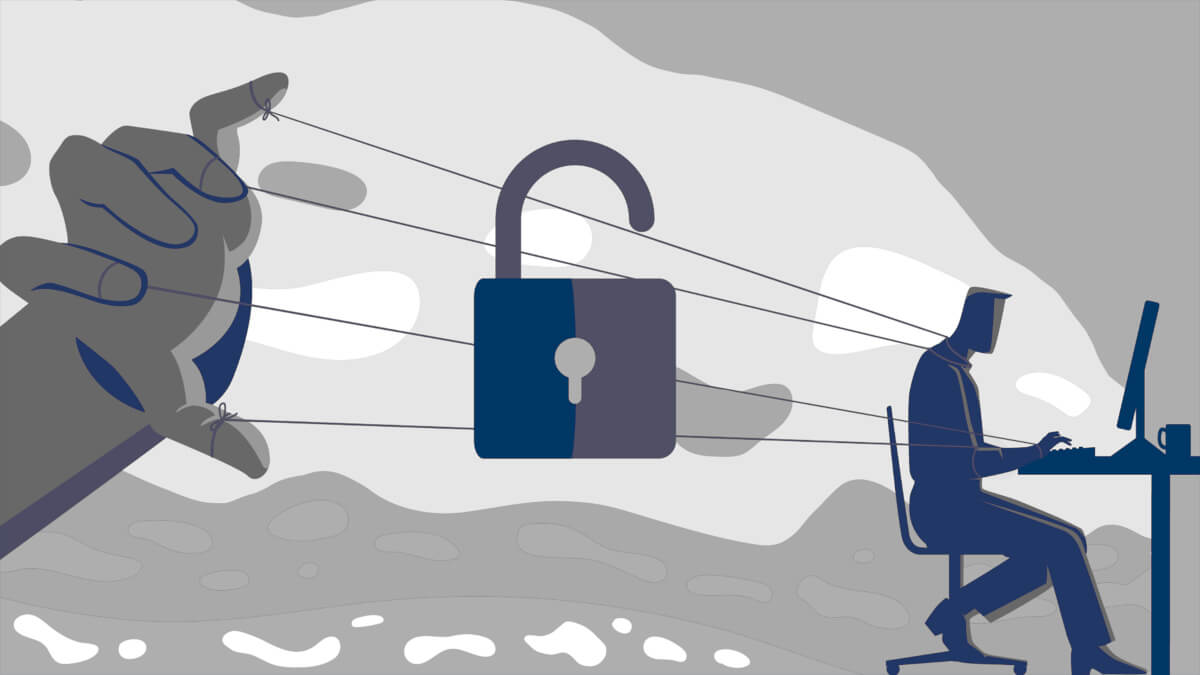
Phishing, covered elsewhere as its own specific category, is actually just one particular form of social engineering — a broader umbrella that includes many other tactics beyond just deceptive emails and messages.
Why social engineering works so well?
Social engineering succeeds because it targets something far harder to patch than a software vulnerability: fundamental, deeply ingrained human psychology. A few specific principles show up again and again across nearly every social engineering tactic.
Authority — People are conditioned from childhood to defer to perceived authority figures — bosses, government officials, law enforcement, IT departments. An attacker impersonating someone with authority can often bypass normal skepticism almost entirely.
Urgency and scarcity — Time pressure is one of the most reliable tools for short-circuiting careful thinking. “Act now or lose access,” “This offer expires in ten minutes,” or “Your account will be suspended today” all deliberately push people toward faster, less scrutinized decisions.
Reciprocity — Humans have a deeply ingrained instinct to return favors. An attacker who offers something first — a small favor, seemingly helpful information, a free gift — can leverage that instinct to make a subsequent request feel harder to refuse.
Social proof — People look to others’ behavior to guide their own decisions, especially under uncertainty. An attacker suggesting “everyone else on your team already did this” can make a fraudulent request feel more legitimate and routine.
Likability and rapport — People are generally more willing to help those they like or feel a connection with, which is exactly why skilled social engineers invest time building apparent rapport before making their actual request.
Fear — Threats of negative consequences — legal trouble, financial loss, job termination — trigger strong emotional reactions that frequently override careful, rational evaluation of a situation.
None of these are exotic psychological tricks — they’re ordinary, everyday aspects of how humans think and interact. Social engineering simply weaponizes them deliberately, in a security context where the stakes are considerably higher than everyday social situations.
Common social engineering tactics.
Pretexting.
Creating a fabricated scenario or false identity specifically to obtain information or access. An attacker might call pretending to be from IT support, claiming they need your login credentials to fix an urgent issue, or pose as a new employee needing building access from a helpful coworker who doesn’t want to seem unhelpful or suspicious.
Baiting.
Offering something enticing — a free download, a USB drive labeled “Confidential Salary Information” conveniently left in an office parking lot, an unusually good deal — designed to lure a victim into taking an action that compromises their security, like plugging in an infected device or downloading malware disguised as something desirable.
Tailgating (or Piggybacking).
A physical-world social engineering tactic where an attacker follows closely behind an authorized employee through a secured door, relying on politeness or a reluctance to seem rude by questioning a stranger, to gain unauthorized physical access to a restricted building or area.
Quid Pro Quo.
Similar to baiting, but specifically framed as an exchange — offering a service or benefit in return for information or access. A classic example is someone calling random employees claiming to offer free IT support, waiting until they reach someone with an actual, genuine technical problem willing to provide credentials in exchange for “help.”
Impersonation.
Directly pretending to be someone else — a coworker, an executive, a vendor, a family member — in order to gain trust and manipulate the target into a specific action. This has become significantly more sophisticated with the emergence of AI-generated voice cloning and deepfake technology, enabling increasingly convincing impersonation of real, specific individuals rather than generic authority figures.
Watering Hole Attacks.
A more indirect approach where attackers compromise a website that a specific target group is known to frequently visit, rather than attacking targets directly — waiting for victims to visit the already-compromised, trusted site on their own.
Real-world social engineering scenarios.
Understanding the theory helps, but seeing how these tactics play out practically makes the risk far more tangible.
The “IT Support” call. An employee receives a call from someone claiming to be internal IT, stating there’s a security issue requiring immediate verification of login credentials. The caller sounds professional, references real internal terminology, and creates urgency around resolving an “active security threat.” Someone unfamiliar with proper verification procedures may simply comply, especially if this call arrives during a busy, distracted moment.
The executive wire transfer request. A finance employee receives an urgent email, appearing to come directly from the company’s CEO, requesting an immediate, confidential wire transfer for a supposedly time-sensitive business deal, explicitly asking the employee to bypass normal verification procedures “just this once” due to the urgency involved. This specific scenario, part of the broader Business Email Compromise category, has resulted in enormous financial losses across countless organizations.
The friendly delivery person. Someone dressed convincingly as a delivery worker approaches a secured building entrance carrying packages, timing their arrival to coincide with actual employees entering, relying on politeness and the awkwardness of questioning someone who appears legitimate to simply walk in unchallenged.
The compromised friend. A message arrives from a friend’s genuinely hacked social media or messaging account, asking for an urgent favor — often financial — using the victim’s existing trust in their actual friend to bypass normal skepticism they’d apply to a message from a stranger.
How to recognize and resist social engineering.
Slow down when urgency appears. Legitimate requests, even genuinely time-sensitive ones, can almost always tolerate a brief pause for independent verification. Treat artificial urgency itself as a specific red flag worth noticing, rather than simply complying with it.
Verify independently, through a separate channel. If someone claiming to be a coworker, IT support, or an executive makes an unusual request, verify through a known, separate communication method — call back using a number you already have on file, rather than one provided in the suspicious message itself.
Be appropriately skeptical of unsolicited contact. Whether it’s a phone call, email, or someone physically approaching you, unsolicited contact requesting sensitive information or unusual actions deserves a baseline level of scrutiny, regardless of how confident or professional the person seems.
Understand that authority can be faked. A confident tone, official-sounding language, or claimed high-level position doesn’t verify legitimacy on its own — genuine authority figures within a properly run organization generally understand and respect reasonable verification steps, rather than pressuring people to skip them.
Question unusual deviations from normal procedure. Requests to bypass standard verification steps “just this once,” particularly around financial transactions or sensitive data access, deserve heightened suspicion rather than being treated as a reasonable, harmless exception.
Protect physical access as carefully as digital access. Tailgating and physical social engineering remain genuinely effective, so maintaining reasonable physical security awareness — questioning unfamiliar individuals in secured areas, not holding doors open reflexively for unidentified people — matters just as much as digital vigilance.
The organizational angle: Culture matters.
Beyond individual awareness, organizations that successfully resist social engineering tend to build a specific kind of culture: one where questioning unusual requests, even from apparent authority figures, is genuinely encouraged rather than seen as insubordinate or overly cautious.
A significant number of successful social engineering attacks succeed specifically because targets feel social pressure not to question an authoritative-seeming request, fearing it might seem rude, incompetent, or excessively suspicious. Organizations that explicitly normalize verification — “no one will be upset if you double-check this request, even if it turns out to be legitimate” — remove a significant amount of the social pressure that social engineering specifically relies on to succeed.
Common social engineering myths.
“I’m too smart or aware to fall for social engineering.” Social engineering specifically exploits normal, universal human psychology rather than a lack of intelligence or awareness. Highly trained security professionals have been successfully social engineered in controlled tests, precisely because the tactics exploit deeply ingrained instincts rather than gaps in specific knowledge.
“Social engineering only happens over email or phone.” As covered above, social engineering spans digital communication, phone calls, and genuine physical, in-person interactions — any avenue involving human interaction and trust is a potential vector.
“If someone sounds confident and professional, they’re probably legitimate.” Confidence and professionalism are frequently deliberately cultivated tools used specifically to enable social engineering, not reliable indicators of genuine legitimacy on their own.
Final thoughts.
Social engineering endures as one of the most effective attack strategies precisely because it doesn’t require defeating firewalls, encryption, or any technical security measure at all — it requires understanding and exploiting ordinary human psychology, which remains fundamentally consistent regardless of how advanced technical security measures become.
The best defense isn’t becoming permanently suspicious of every interaction, which isn’t realistic or healthy. It’s building specific habits — pausing under artificial urgency, verifying independently through known channels, and normalizing healthy skepticism even toward apparent authority — that address the exact psychological levers social engineering is specifically designed to pull.
