
Choosing the right cooktop is one of the most important decisions for a modern day kitchen; since the gas prices are touching sky, electric options are now look cheaper alternative and doesn’t requires different connection. On top of this, houses with a decent solar setup can save a lot of money in monthly electricity bills also.
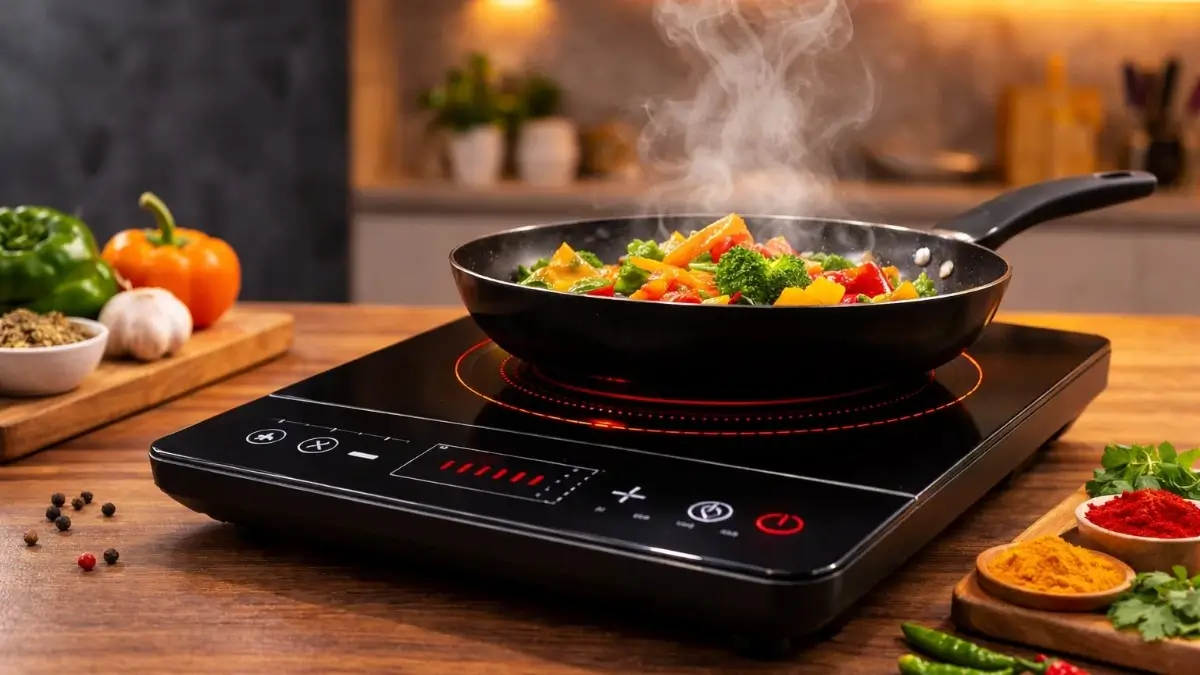
Among electric cooking options, induction cooktops and infrared cooktops are the two most popular choices. But many new and even experienced users often ask:
- Induction vs infrared cooktop – which is better?
- Is induction safer than infrared?
- Which cooktop consumes less electricity?
- Can I use normal utensils on induction or infrared?
In this article, I will help you compare and understand the induction versus infrared cooktops across technology, efficiency, electricity consumption, safety, cookware compatibility, cooking performance, maintenance, and cost, so you can make an informed decision and choose the right thing for you.
What Is an Induction Cooktop?
In simple term, an induction cooktop uses electromagnetic induction technology to heat cookware directly. Instead of heating the glass surface, it generates a magnetic field that produces heat inside the pan itself.
How Induction Cooking Works?
- Electricity creates a magnetic field.
- The magnetic field induces heat in ferromagnetic cookware.
- Food cooks faster with minimal heat loss.
Key Characteristics:
- Works only with induction-compatible cookware. Its additional expense.
- Surface remains relatively cool. Makes it safe for accidental touch.
- Very fast heating and precise control.
What Is an Infrared Cooktop?
In simple term, an infrared cooktop works using radiant heat technology. Which is a heating element (usually halogen or carbon coil) glows red and transfers heat to the glass surface, which then heats the utensil.
How Infrared Cooking Works?
- Heating element warms the glass top.
- Heat transfers from glass to cookware.
- Similar to traditional electric stoves but more advanced.
Key Characteristics:
- Works with all types of cookware. You don’t need to buy compatible ones.
- Glass surface becomes very hot. So it acts like normal gas stove.
- Slower heat response than induction.
Induction vs Infrared Cooktop: A Detailed Comparison.
1. Cooking Speed & Performance.
Induction Cooktop:
- Extremely fast heating
- Boils water up to 50% faster
- Instant temperature changes
- Ideal for frying, sautéing, boiling, and pressure cooking
Infrared Cooktop:
- Slower heating than induction
- Heat adjustment takes time
- Suitable for slow cooking and basic meals
The winner is induction cooktop.
2. Energy Efficiency & Electricity Consumption.
One of the most searched questions is:
Which cooktop consumes less electricity – induction or infrared?
Induction Cooktop:
- Efficiency: 85–90%.
- Heat generated directly in cookware.
- Minimal energy wastage.
Infrared Cooktop:
- Efficiency: 60–70%.
- Heat lost through glass and surroundings.
- Higher electricity usage over time.
The winner is induction cooktop.
3. Safety Features.
Induction Cooktop:
- Surface remains cool.
- Auto pan detection.
- Auto shut-off when pan removed.
- Very low burn risk.
- Best for homes with kids and elderly.
Infrared Cooktop:
- Glass surface becomes extremely hot.
- Higher risk of accidental burns.
- Heat remains even after switching off.
The winner is induction cooktop.
4. Cookware Compatibility.
Induction Cooktop:
- Requires magnetic cookware.
- Stainless steel (magnetic), cast iron works.
- Aluminum, copper, glass do not work unless induction-base.
Infrared Cooktop:
- Works with all cookware.
- Aluminum, copper, clay, glass, steel — everything.
The winner is infrared cooktop. This is also a reason why many Indians ignore all the benefits of induction and opt for infrared, specially for their cookware.
5. Temperature Control & Precision.
Induction Cooktop:
- Precise temperature control.
- Instant response.
- Best for delicate cooking like sauces and chocolates.
Infrared Cooktop:
- Slower response.
- Temperature overshoot possible.
The winner is induction cooktop.
6. Cleaning & Maintenance.
Induction Cooktop:
- Food spills don’t burn easily.
- Easy wipe cleaning.
- Smooth glass surface stays cleaner.
Infrared Cooktop:
- Spills burn onto hot glass.
- Requires more effort to clean.
- Glass discoloration over time.
The winner is induction cooktop.
7. Cost & Long-Term Value.
Induction Cooktop:
- Higher upfront cost.
- Saves electricity long term.
- Requires induction-compatible cookware.
Infrared Cooktop:
- Cheaper initial price.
- Higher electricity cost over time.
- No extra cookware expense.
The winner is depends on budget. We often see cost of both similar.
Induction vs Infrared Cooktop: Comparison Table.
| Feature | Induction Cooktop | Infrared Cooktop |
|---|---|---|
| Cooking speed | Very fast | Moderate |
| Energy efficiency | High | Medium |
| Electricity consumption | Low | Higher |
| Safety | Excellent | Average |
| Cookware compatibility | Limited | Universal |
| Temperature control | Precise | Slower |
| Cleaning | Easy | Moderate |
| Initial cost | Higher | Lower |
Which Cooktop Is Better for Indian Cooking?
Choose Induction Cooktop if:
- You cook daily.
- Want faster cooking.
- Want lower electricity bills.
- Safety is a priority.
- Modern, efficient kitchen setup.
Choose Infrared Cooktop if:
- You already have non-magnetic utensils.
- You want a budget-friendly option.
- Cooking frequency is low to moderate.
- You prefer traditional cooking style.
Frequently Asked Questions (FAQs).
Is induction better than infrared cooktop?
Yes, induction cooktops are generally better in terms of speed, efficiency, safety, and electricity savings. Induction cooktops offer the highest energy efficiency, typically boasting 80-90% efficiency, followed by infrared at roughly 70%, while normal gas stoves are significantly less efficient at only 40-50%.
Which cooktop is best for electricity saving?
Induction cooktops consume less electricity compared to infrared cooktops.
Can we use normal utensils on induction?
No, induction requires magnetic cookware. Infrared works with normal utensils.
Which cooktop is safer for home?
Induction cooktops are much safer, especially for families with children.
Does infrared cooktop consume more power?
Yes, infrared cooktops consume more power over long-term use.
Final Verdict: Induction vs Infrared – Which One Should You Buy?
Induction cooktop is the best choice for most users due to:
- Faster cooking.
- Energy efficiency.
- Advanced safety.
- Better temperature control.
Infrared cooktop is suitable if:
- Budget is limited.
- Cookware compatibility matters more.
- Cooking needs are basic.
So you have the answers, if you wan to add additional features to the content then raise your voice in the comment section below and let the world see it.

Leave a Reply