
Even in 2025, when the world is rapidly adopting 4G LTE, VoLTE, 5G NR, and even experimenting with 6G research, one technology continues to survive: 2G.
Surprisingly, 2G networks are still active in many countries, including India, parts of Africa, Southeast Asia, and rural regions globally.
So the question arises — why is 2G still in use when we have ultra-modern mobile networks and why did 3G get phased out before 2G?
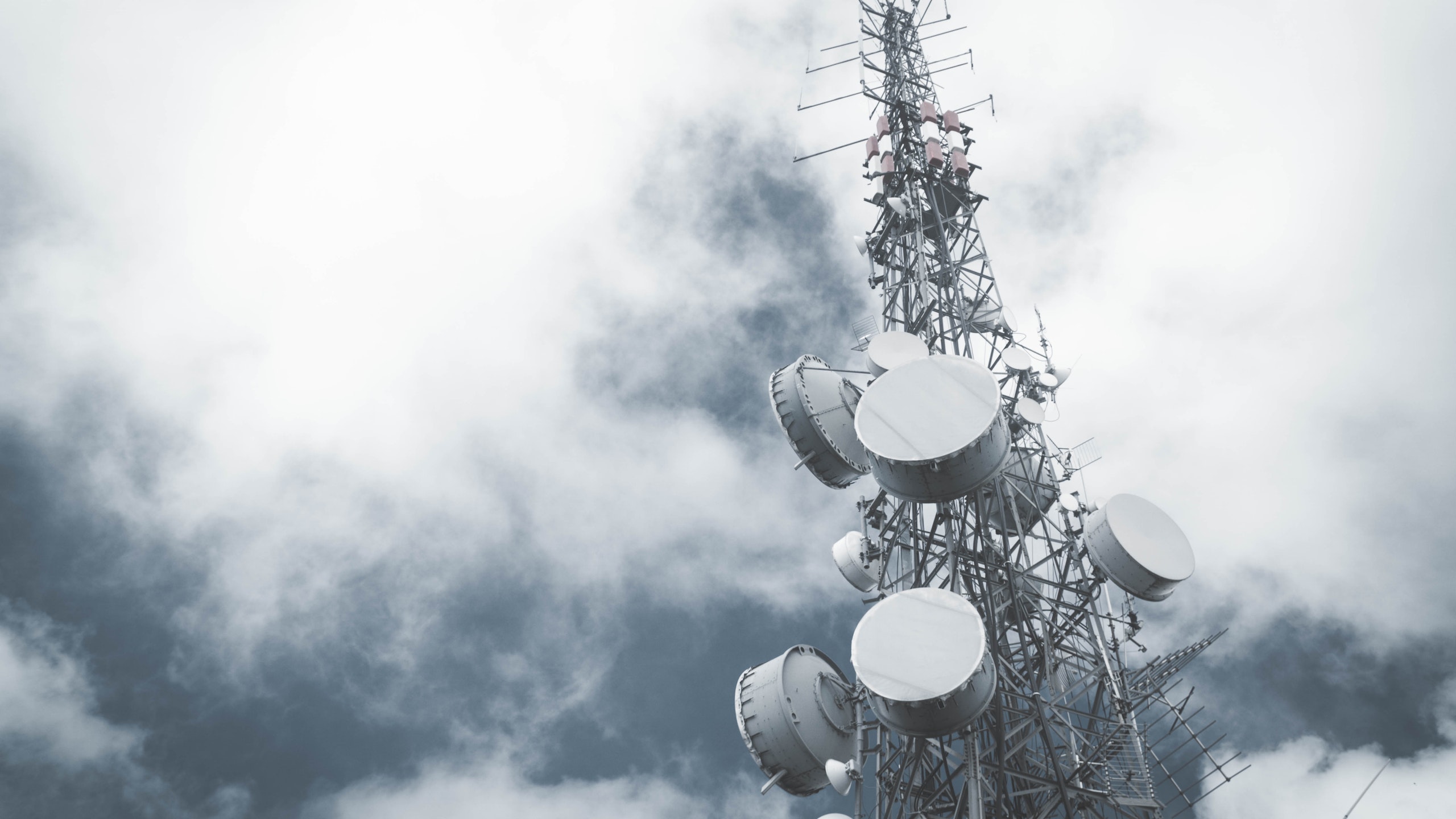
This article explains everything — technical reasons, economic factors, global telecom strategy, and real-world use cases that keep 2G relevant even today.
What is 2G? Quick overview.
2G (Second Generation mobile network) was launched in the early 1990s.
It introduced digital signals, SMS, and basic data [GPRS (General Packet Radio Service)/EDGE(Enhanced Data-Rates for GSM Evolution)].
Key technologies included:
- GSM (Global System for Mobile-Communications).
- GPRS (2.5G).
- EDGE (Enhanced Data-Rates for GSM Evolution).
While slow for data, 2G is extremely stable for voice, low-power, and low-bandwidth, which turns out to be a huge reason why it is still alive today.
Why is 2G still in use? (Main reasons explained).
2G is still in use because it remains the most reliable and low-cost network for basic voice calling, SMS, and IoT devices.
Telecom operators keep 2G active as a universal fallback network, especially for feature phones and machine-to-machine communication, which don’t need high-speed data.
Despite being an old network, 2G continues to serve specific, critical, and large-scale use cases. Let’s break down the major reasons.
1. 2G is extremely reliable for voice calls.
4G and 5G are primarily data-focused technologies, and they require VoLTE or VoNR for voice services.
Millions of feature phones globally do not support VoLTE, especially older models.
Thus, telecom operators keep 2G networks running to offer:
- Fallback voice calling.
- Emergency calling.
- Coverage in remote areas.
Even today, when 4G drops or fails, your phone may fall back to 2G for voice.
2. Massive use in IoT, M2M, and low-cost devices.
Modern IoT (Internet of Things) devices often require:
- Very small data packets.
- Long battery life.
- Cheapest connectivity.
- Wide coverage.
Examples include:
- Smart meters.
- Vehicle tracking (GPS trackers).
- POS machines.
- Security alarms.
- E-toll devices.
- Industrial sensors.
For these devices, 2G is perfect because it offers:
- Low power consumption.
- Nationwide coverage.
- Very cheap modem hardware.
- Simple deployment.
This IoT ecosystem alone keeps 2G economically viable.
3. 2G network coverage Is wider than 3G/4G in many regions.
2G uses lower frequency bands like 900 MHz, which:
- Travel farther.
- Penetrate walls effectively.
- Require fewer towers.
For rural and remote areas, 2G is the most economical network to maintain.
Even today, some villages worldwide receive only 2G voice coverage, because deploying 4G is expensive.
4. Billions of feature phones still depend on 2G.
Not everyone uses a smartphone.
Globally, more than 1.5 billion feature phones still rely on 2G networks.
These users:
- Only need calling/SMS.
- Prefer low-cost phones.
- Don’t require 4G data.
- Live in rural or low-income areas.
Shutting down 2G would disconnect a massive population, impacting basic communication access.
5. Emergency systems, critical infrastructure still use 2G.
2G is deeply integrated into many old and critical systems:
- ATMs.
- Railway signalling networks.
- Emergency call boxes.
- Government alert systems.
- Disaster warning systems.
Replacing these networks overnight is costly and complex, so operators keep 2G alive.
6. Cheapest operating cost among all generations.
Running a 2G GSM network requires:
- Low energy.
- Minimal maintenance.
- Simple hardware.
This makes it the most cost-effective fallback network.
Telecom operators prefer to shut down 3G, which is costlier and less efficient, rather than 2G.
Why did 3G get phased out before 2G?
This is the part that surprises everyone.
If 2G is older than 3G, why did 3G shut down first in many countries?
Let’s understand.
1. 3G offers poor efficiency compared to 4G.
3G was mainly built for:
- Mobile internet.
- Video calling.
- Multimedia messaging.
But 3G has poor spectral efficiency compared to newer networks.
4G and 5G deliver much more data using the same spectrum.
Maintaining 3G becomes financially wasteful for operators.
2. 3G requires more towers and power.
3G signals, especially UMTS, operate at higher frequencies (2100 MHz):
- Shorter range.
- Weak indoor penetration.
- Higher power consumption.
This makes 3G expensive and inefficient to run.
3. 3G Handsets are almost extinct.
Today:
- Most smartphones support 4G.
- Ultra-low-cost phones support only 2G.
- Virtually no one uses 3G-only phones.
This made 3G the least useful network, leading to its rapid shutdown.
4. 3G cannot support VoLTE.
3G supports:
- CS Voice (Circuit-Switched Voice).
- Limited data.
But it cannot integrate with modern IMS-based VoLTE used by 4G and 5G.
Operators want a clean VoLTE/VoNR voice system, making 3G unnecessary.
5. Operators need 3G spectrum for 4G and 5G.
The spectrum used by 3G (2100 MHz) is extremely valuable.
Shutting down 3G helps operators:
- Re-farm spectrum.
- Boost 4G capacity.
- Expand 5G rollout.
This is one of the biggest reasons behind the global 3G shutdown wave.
Why not shut down 2G instead?
Because shutting down 2G would break:
- Feature phone connectivity.
- IoT networks.
- Machine-to-machine communication.
- Emergency services.
- Rural connectivity.
- Legacy industrial systems
2G is simply too deeply integrated.
Why 2G still matters in the 4G and 5G era!
Let’s break down the core advantages that keep 2G alive.
1. Ultimate compatibility (works with every phone).
A 2G network works with:
- Old Nokia phones.
- Low-cost feature phones.
- Budget smartphones.
- International roaming phones.
- IoT devices.
No other network has such universal support.
2. Simple technology = less failure.
2G uses simpler architecture:
- No complex voice packetization.
- No VoLTE.
- Fewer resources required.
- Lower latency for small packets.
This makes it highly stable.
3. Acts as a backup network for all other generations.
If 4G/5G or VoLTE fails, phones often fall back to 2G.
So telecom operators keep 2G as a safety and reliability layer.
4. Perfect for developing countries.
Countries with:
- Rural populations.
- Low smartphone penetration.
- Low ARPU (average revenue per user).
…find 2G economically perfect.
This is why India, Bangladesh, Africa, Nepal, Sri Lanka, etc. continue using 2G.
When will 2G finally shut down?
Most experts believe 2G will continue until:
- IoT devices migrate to NB-IoT / LTE-M.
- Feature phones fully support VoLTE.
- Rural populations shift to smartphones.
- Emergency systems get upgraded.
Realistically, 2G will remain in many countries until 2030–2035.
Some nations may shut it earlier, but globally it remains key.
Future of connectivity: Will 2G be replaced?
Yes — but gradually. The replacements will be:
- LTE-M.
- NB-IoT.
- 4G VoLTE-only networks.
- 5G RedCap (reduced capability devices).
These future technologies will eventually phase out 2G, but not immediately.
FAQs about 2G.
1. Why is 2G still used today?
Because of feature phones, IoT devices, backup voice calling, and low operating cost. Major population still using basic phone for their communications.
2. Is 2G going to shut down?
Yes, but gradually. It will take years because many systems still rely on it.
3. Why did 3G shut down before 2G?
3G is inefficient for data and expensive to maintain, while 2G supports voice and IoT.
4. Do 4G or 5G phones need 2G?
Some do, for fallback voice and roaming support.
5. Is 2G enough for calling?
Yes, 2G provides stable circuit-switched voice quality.
6. Does 2G work everywhere?
It has wider coverage than 3G and sometimes 4G in rural areas.
Conclusion.
2G survived because it remains:
- Reliable.
- Cheap.
- Widely compatible.
- Essential for IoT.
- A backbone for rural communication.
3G, despite being newer, was inefficient and costly (in comparison to 2G), so it was phased out first. Even as 4G and 5G take over the world, 2G continues to play a foundational role in global communication.

Leave a Reply